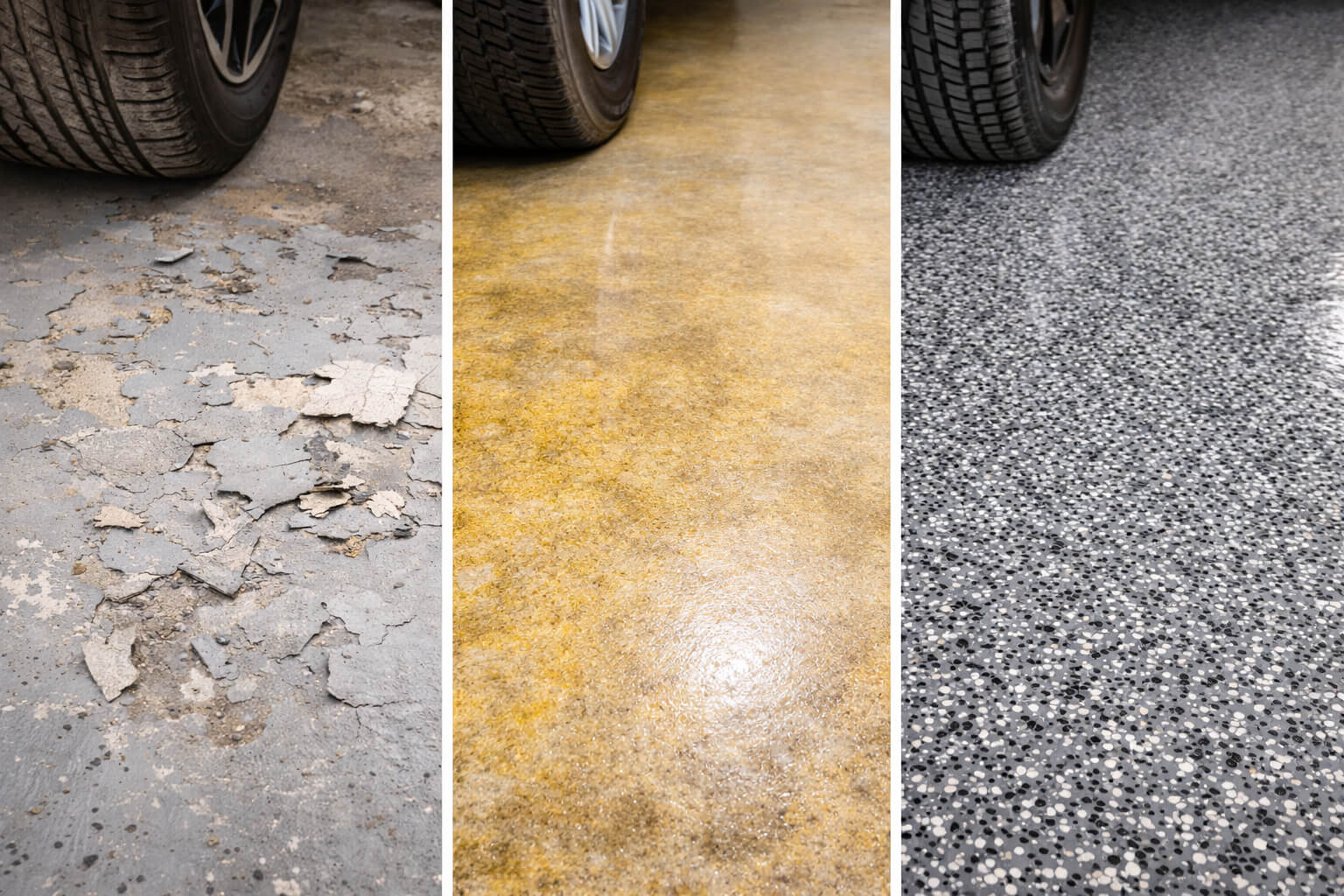
Garage floors are where good intentions go to die. You paint it, and it peels. You try epoxy, it yellows. Suddenly, you are stuck comparing products that all promise lifetime results. This guide clears the noise. We break down polyaspartic vs epoxy floor coating options and explain why basic paint never survives real garage life. You will see how each coating performs, what actually fails over time, and which choice makes sense for Minnesota homes. For homeowners who want to see how these coatings perform in real garages—not lab tests— professional garage floor coating solutions show what properly installed systems look like over time. This comparison is designed to give you clear, practical insight before committing to any coating.
The Contenders: What You’re Really Comparing
Before choosing, it helps to understand what each option actually is.
Garage Floor Paint
Garage floor paint is acrylic or latex-based and sits on the surface. It improves appearance but offers minimal protection and wears quickly under heat, moisture, and traffic.
Epoxy
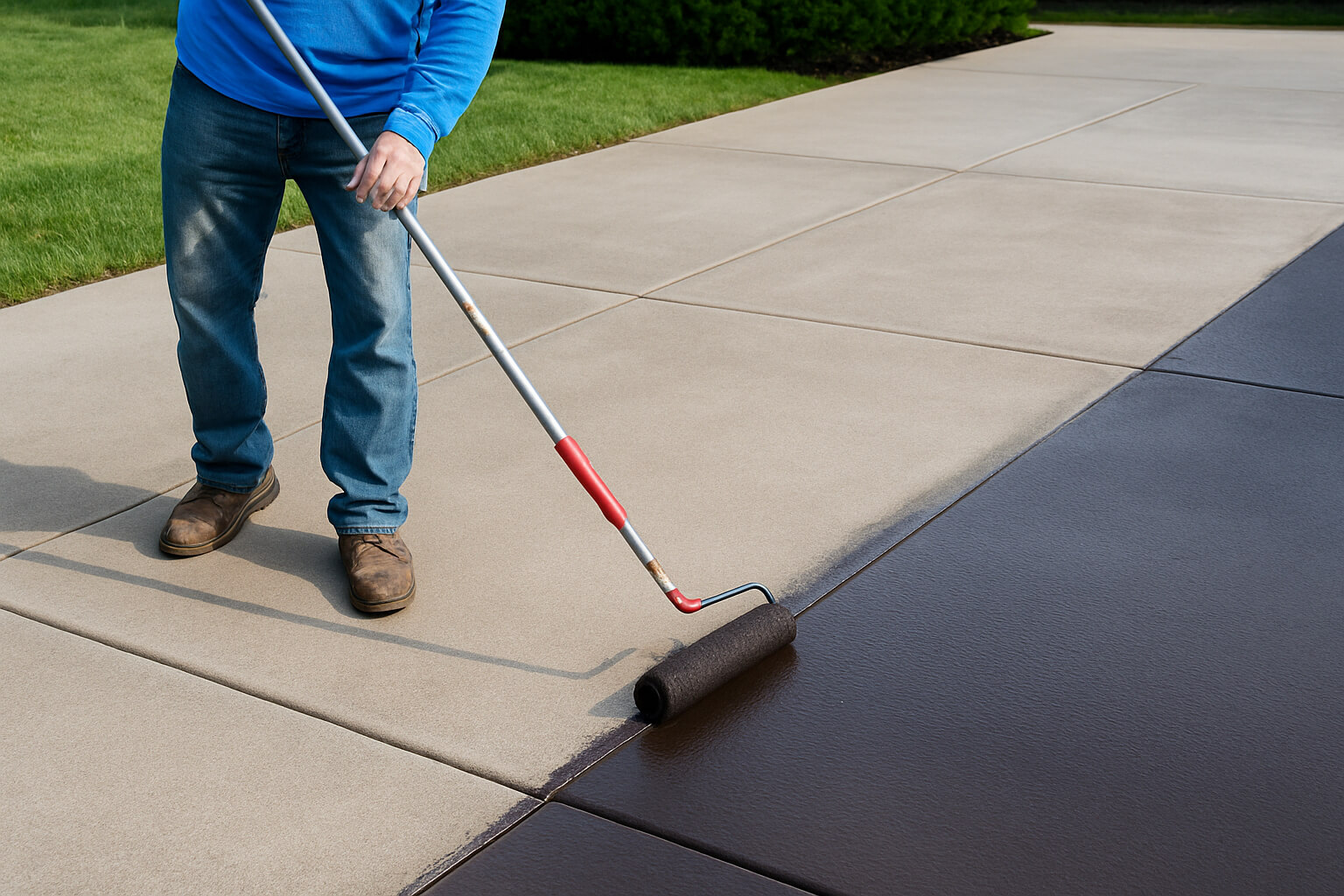
Epoxy is a two-part coating that hardens into a thicker layer. It’s more durable than paint, but it cures slowly and can crack or peel as concrete expands and contracts.
Polyaspartic and Polyurea
A polyurea garage floor coating penetrates deeper into the concrete for a stronger bond. A polyaspartic garage floor system cures fast, stays flexible, and handles heavy use and temperature changes better than epoxy.
The Deep Dive Comparison
Here’s how the options stack up where it matters.
| Feature | Paint | Epoxy | Polyaspartic / Polyurea |
| Durability | Low | Moderate | High |
| UV Resistance | Poor | Poor | Excellent |
| Cure Time | 24–72 hours | 3–7 days | 24 hours |
| Flexibility | None | Low | High |
When homeowners compare garage floor paint vs epoxy, epoxy looks better. But polyaspartic vs epoxy floor coating comparisons show a clear winner long term.
Why Fast Cure Actually Matters
Fast cure is not just convenience. It reduces disruption.
- Your garage is usable the next day
- Less dust contamination during curing
- Lower risk of moisture issues
- No week-long parking shuffle
Polyaspartic systems cure quickly and evenly, which improves adhesion and final strength.
The UV Problem Most Epoxy Floors Face
Epoxy struggles with sunlight. Even indirect UV causes yellowing and chalking. That’s why many epoxy floors fade near doors and windows. Polyaspartic coatings are UV-stable. They keep their color and gloss for years, even with daily sun exposure. This is a major difference in epoxy vs paint garage floor decisions and long-term satisfaction.
Cost vs. Value: The Real Math
Yes, polyaspartic costs more upfront. But here’s the reality.
- Paint often fails within one year
- Epoxy may need replacement in five
- Polyaspartic commonly lasts ten years or more
Over time, re-coating costs more than doing it right once. In most polyaspartic vs epoxy floor coating evaluations, value favors polyaspartic.
DIY vs. Professional Installation
This is where many projects fail.
Polyaspartic requires:
- Diamond grinding, not acid etching
- Precise mixing and timing
- Moisture testing
- Professional equipment
DIY kits skip prep. That leads to peeling, bubbling, and wasted money. Professional prep is non-negotiable for performance.
Which Should You Choose?
If the budget is tight and expectations are low, paint works briefly. Epoxy suits low-light garages with moderate use. If you want durability, color stability, and long-term value, polyaspartic is the clear choice.
polyaspartic vs epoxy floor coating decisions come down to how long you want results to last.
Ready to upgrade with confidence? Contact Concrete Refresh today for a free floor inspection and honest estimate.